
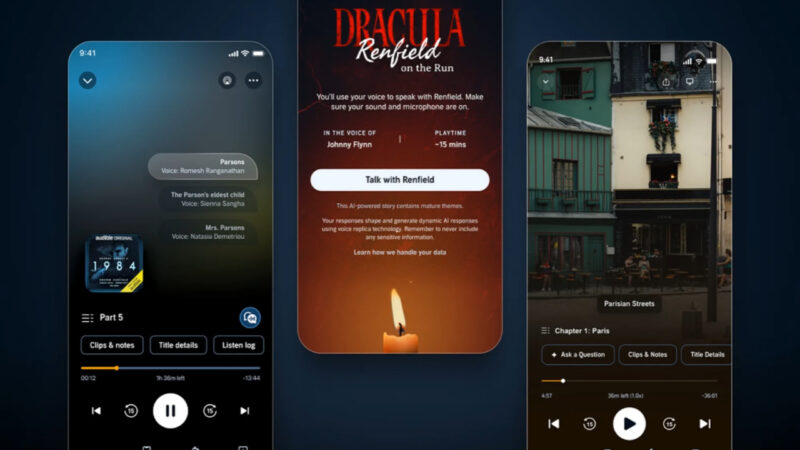
An audiobook normally asks one thing of you: listen. Audible has decided the characters should now be able to talk back.
On October 1, the Amazon-owned company announced Interactive Story, a feature for speaking with a character from its new Bram Stoker’s Dracula.
Not Dracula himself, unfortunately, but Renfield, the Count’s deeply troubled servant. Possibly a more interesting conversationalist anyway.
There’s a catch, though: the conversation is rolling out this fall in a limited US and UK beta. It isn’t available to every subscriber. The audiobook itself arrived October 1.
I find the idea genuinely intriguing. I’m also not convinced that every story gets better when the audience is invited to interrupt it.
You’re Not Just Choosing What Renfield Says Next
Audible’s Dracula stars Jonathan Bailey as the Count and Ella Purnell as Mina, with a full cast, music, and sound effects. Think audio drama rather than one person reading aloud.
The interactive part is a separate bonus story, not a button that lets you derail the actual book.
Renfield starts by giving you a role, a goal, and a problem to solve. You answer in your own words, and he responds immediately. You aren’t limited to choices on a menu.
Generative AI makes this possible: software creates a reply based on what you said and the character it has been told to play. It isn’t simply selecting one of three prerecorded answers.
A preview of the beta describes an experience lasting about 15 minutes, which sounds more like a short extra scene than an endless conversation.
Audible says creators establish the opening scenes, major turning points, and personality. The AI fills in the conversation around them.
That distinction matters. I want Renfield to act like Renfield, not suddenly start recommending productivity apps because I asked an unexpected question.
We’ve Tried Interactive Stories Before. They Didn’t Take Over.
The interesting part isn’t that Audible has discovered audience participation. It hasn’t.
In 2019, Audible released a Choose Your Own Adventure experience for Alexa. You spoke a choice, and the story followed that path. Netflix tried interactive films like Black Mirror: Bandersnatch, then retired that format in 2025.
It’s here! Say “Alexa, open Choose Your Own Adventure”…if you dare ⛰️ https://t.co/klcJkarAan https://t.co/M0uDnUdBNG
— Audible (@audible_com) February 4, 2019
Audience participation has been a selling point for years without replacing the pleasure of just listening.
Audible’s new approach does remove an old limitation. Rather than picking option A or option B, you can say whatever comes to mind. The character is supposed to respond as though you are part of the scene.
I can see the appeal in horror. Speaking to Renfield could be creepier than clicking “Ask him about Dracula,” especially when your imagination supplies the scenery.
But if Renfield repeats himself, forgets what you said, or breaks character, the novelty will fade.
Talking to a fictional character is impressive. Having an interesting conversation is harder.
The Less Exciting Feature Might Be the One People Actually Use
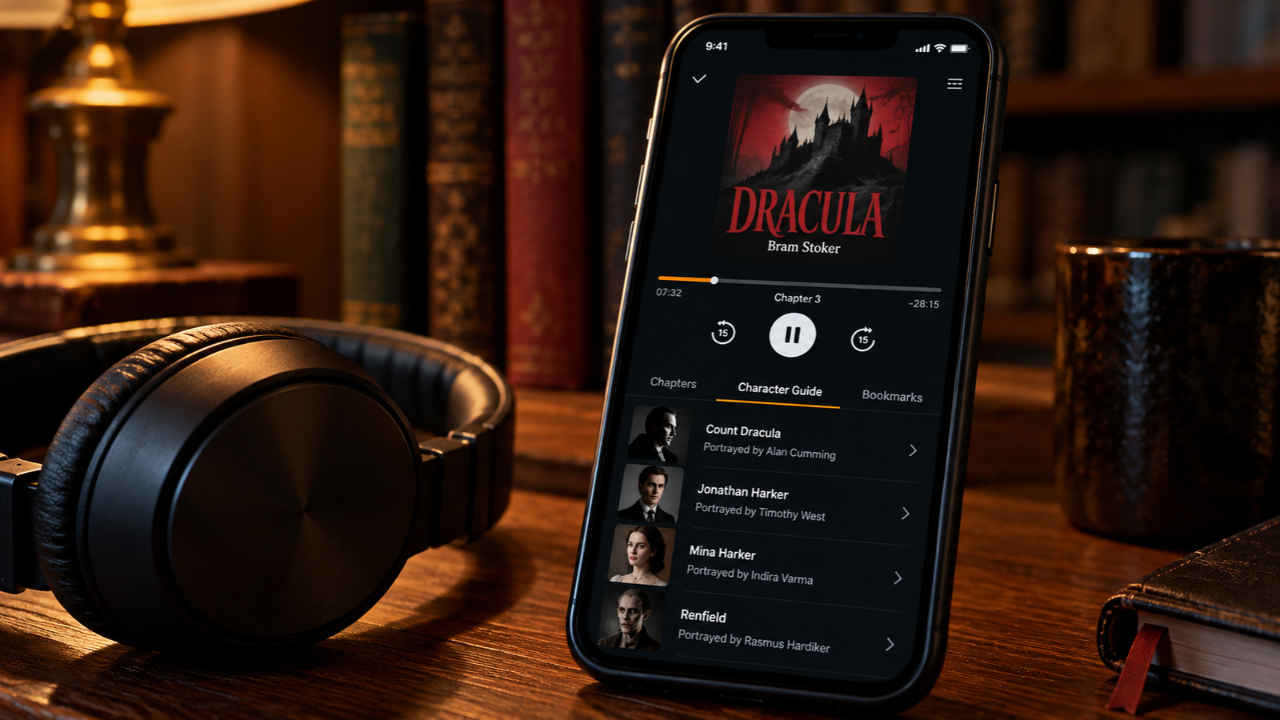
Audible announced two other additions alongside Interactive Story, and one of them strikes me as immediately more useful.
Character Guide, already available in the new Dracula and Audible’s version of George Orwell’s 1984, identifies who is speaking as the audio plays.
It also provides spoiler-free character cards, including information about the actors performing each role. Audible plans to add the ability to ask questions about the production later.
That’s a real problem with large casts. A printed book lets you glance back a page; finding the equivalent passage in an audiobook can feel like an archaeological project.
Visual Explorer, meanwhile, will add maps and images at relevant moments, starting with The Cultural Tutor’s Grand Tour, a history-and-culture title. Sometimes seeing a place helps.
Still, there’s something funny about making an audio service more visual when many people listen specifically to escape screens.
In the Audio Publishers Association’s 2026 consumer research, 70% of people who had ever listened to audiobooks valued them as an alternative to screen time.
For me, Character Guide is the sensible upgrade. Talking to Renfield is the feature you’ll tell a friend about.
Knowing who is talking during chapter seven is the feature you might quietly appreciate every week.
Why Audible Wants a Conversation Instead of Another Chapter
There’s a business story underneath all this, naturally. US audiobook sales reached $2.43 billion in 2025, up 9%, according to the Audio Publishers Association.
View this post on Instagram
Spotify is adding its own audiobook tools, including AI-powered recaps that remind listeners where they left off.
Audible needs reasons for people to choose Audible, rather than treating an audiobook as the same recording available through whichever app they already use.
An exclusive production with famous actors is one reason. A character you can talk with is another. Both might keep you coming back.
The announcement doesn’t say whether the new features will eventually cost extra, though. For subscribers, that detail could matter more than the AI.
Audible’s chief content officer, Rachel Ghiazza, explicitly linked these features to more time spent with stories. I understand the logic: attention is valuable.
But more time inside an app is not automatically more enjoyment for the customer. Streaming companies have spent years confusing those two things. I’m not eager to see audiobook companies develop the same habit.
The Character Needs Limits, and So Does the Technology
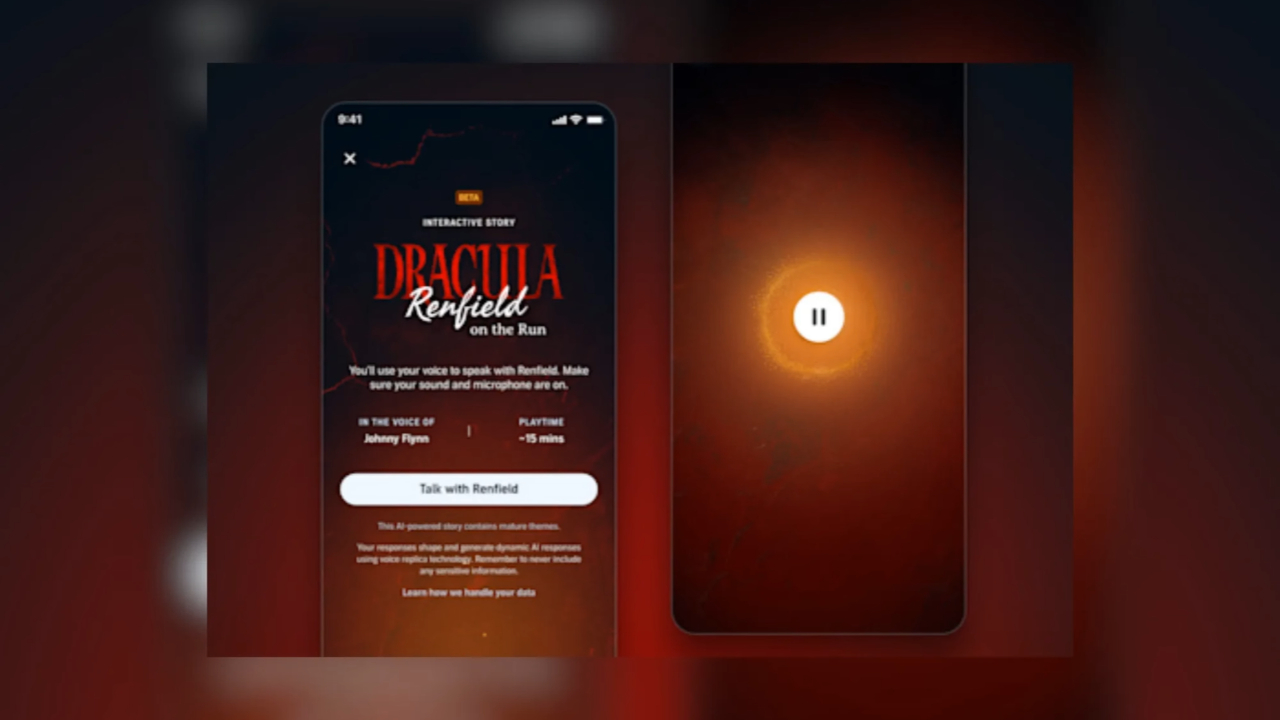
There is another question I don’t think Audible can afford to treat as a footnote: who controls what an AI character says?
Generating new lines in a performer’s recognizable voice raises questions about consent and creative control. A preview screen reported by Tech My Money mentions voice-replica technology and warns listeners not to share sensitive information.
Audible says creators shape the scenes and characters. Encouraging, but setting rules isn’t the same as approving every generated line.
Its announcement doesn’t fully explain how conversations are handled or how it prevents wildly out-of-character replies. If an app invites you to speak freely, it should also tell you clearly what happens to those words.
Those details matter more to me than whether the technology can produce a convincing creepy whisper.
A similar concern surrounds human-like robots and the trust people place in them, especially when realistic behavior creates expectations that the technology cannot meet.
I Like the Experiment. I Don’t Want It to Become Compulsory.
@audible In this audiobook, the silence has a name. 👀 ‘Dracula’, the new Audible adaptation of Bram Stoker’s novel, is designed to be slowly consumed. Otherwise, it may consume you. Click play of your own free will, only on Audible. @Jack Edwards ♬ original sound – Audible
For now, Audible is being sensible about one thing: Renfield’s conversation sits beside Dracula, rather than replacing the original story.
That is exactly where I think this sort of experiment belongs. Give curious listeners another door into a fictional world. Let everyone else enjoy the actors, music, and story without having to participate in a Victorian nightmare.
If the conversations are convincing and respect the performers behind the voices, this could be a valuable addition. If it’s just awkward AI small talk, listeners will probably return to the book.
Sometimes the most immersive thing a story can do is leave you alone long enough to listen.