YouTube is now responsible for more television viewing in the United States than any traditional media company.
I still find that slightly strange to write. YouTube spent years occupying a completely different mental category from television. TV meant networks, cable channels, and expensive shows made by large studios.
YouTube meant tutorials, music videos, creators talking to cameras, and whatever you ended up watching at 1 a.m. after clicking six unrelated recommendations. The screen has changed that distinction.
According to Nielsen’s July 2026 data, YouTube accounted for a record 14.2% of U.S. television viewing. NBCUniversal and Versant combined for 9.2%, while Fox had 7.8%.
YouTube’s lead over the next-largest media distributor reached five percentage points.
At some point, calling YouTube merely an internet video platform stops describing what people are actually doing with it. They are turning on the television and watching YouTube.
YouTube’s TV Growth Has Been Fast
View this post on Instagram
The size of YouTube is not exactly breaking news. The speed at which it has taken over the television screen is more interesting.
Nielsen’s numbers show a fairly dramatic change:
[su_table responsive=”yes”]
| Period | YouTube share of U.S. TV viewing |
| February 2023 | 7.9% |
| February 2025 | 11.6% |
| July 2026 | 14.2% |
[/su_table]
Between February 2023 and February 2025 alone, time spent watching YouTube on television increased 53%.
Viewing among adults aged 65 and older rose 96% over the same period, according to Nielsen’s two-year comparison.
I think that older-audience figure deserves more attention than it gets.
YouTube winning teenagers is not particularly surprising. YouTube has been part of their media lives for years.
Someone in their seventies becoming a regular YouTube viewer tells us something different. It suggests the platform is escaping the age group and device categories that once defined it.
YouTube itself said in early 2025 that TV had overtaken mobile as its primary viewing device in the United States by watch time.
That is the point where the “YouTube versus television” distinction starts falling apart.
The TV Screen Changes How People Use YouTube

Watching YouTube on a television is not simply watching the same thing on a larger rectangle.
The setting changes the behavior.
A person holding a phone might watch a short clip while waiting for a bus. Someone sitting on a sofa in front of a 55-inch screen is much more likely to settle into something longer.
Creators have responded accordingly.
Long interviews, documentaries, video essays, podcasts and elaborate entertainment shows now sit comfortably beside the shorter videos YouTube was once known for.
Some large channels have production teams with researchers, writers, editors, producers and dedicated studios.
In September 2026, YouTube said more than half of its top creators had TV as their most-watched interface.
To me, that is one of the clearest signs that YouTube has genuinely become television rather than merely appearing on television sets.
Creators know where people are watching. They make content for that environment.
YouTube Has a Very Different Programming Department
Traditional TV companies have always faced a difficult problem. They have limited schedules and need to decide which programs deserve those hours.
YouTube does not really have that problem.
Anyone can upload. Most videos will attract very small audiences. A few will become enormous.
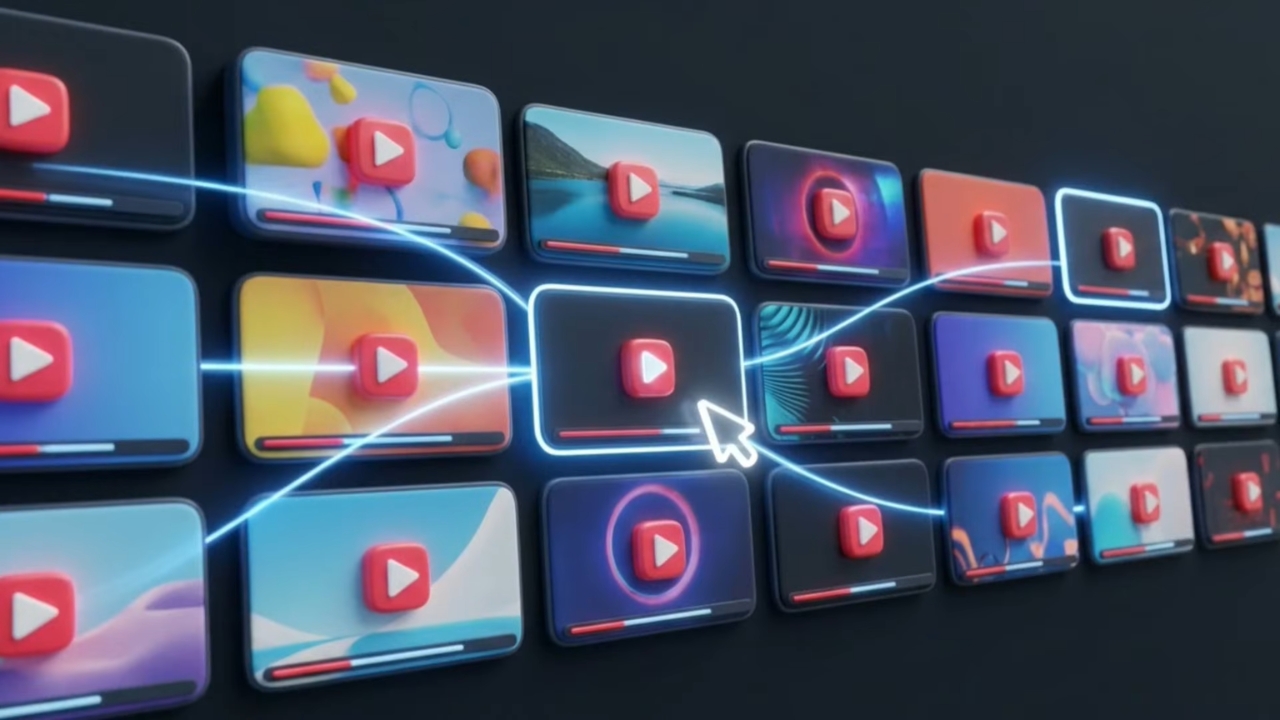
The platform then uses its recommendation system to connect viewers with videos it thinks they are likely to watch.
That creates a completely different kind of television service.
Consider what one person might watch during a week:
- a 90-minute history documentary;
- highlights from last night’s football game;
- a cooking channel;
- an interview with a musician;
- three videos about restoring an old car;
- a podcast about business;
- a ten-minute tutorial explaining why the dishwasher is leaking.
No traditional television executive would build a channel around that schedule because the schedule belongs to one person. YouTube can.
The platform does not need 10 million people to agree that the same show is worth watching at 8 p.m. It can serve 10 million people completely different things.
I find that advantage more important than any argument about whether YouTube creators are making “TV-quality” content. The real breakthrough is that YouTube does not need everybody watching the same content for the system to work.
Traditional Television Has a Cost Problem
The economics make the competition even harder.
A television company can spend hundreds of millions of dollars producing programs, operating newsrooms, acquiring movies and paying for sports rights before it knows whether enough people will watch.
YouTube owns the distribution platform, but most of the programming is financed and produced by creators, media companies and other uploaders.
When eligible videos attract viewers, YouTube sells advertising and shares part of the revenue with creators.
That arrangement shifts an enormous amount of production risk away from YouTube.
There is another basic advantage. A conventional channel can show one program at a time.
YouTube can simultaneously serve millions of programs to millions of different people.
Traditional television companies have responded by launching their own streaming platforms, improving apps and building recommendation systems. Those changes help, but they do not remove the underlying difference.
YouTube started with practically unlimited shelf space.
Television companies started with schedules.
The Money Says This Is More Than an Audience Experiment
A huge audience is much less useful if a company cannot turn it into a sustainable business.
YouTube clearly can.
Alphabet reported that YouTube generated more than $60 billion from advertising and subscriptions during 2025.
Google has revealed YouTube brought in more than $60bn (£44bn) in revenue in 2025 as the firm targets getting more subscribers.
The figure, which totals the money generated through advertising on YouTube as well as paid subscriptions, far surpasses streaming rival Netflix’s $45bn revenue.
— The Morning (@TheMorningLK) February 9, 2026
Its 2025 financial results show just how substantial the business has become. In the second quarter of 2026, YouTube advertising revenue grew another 13% from the previous year.
The business now reaches far beyond ordinary video ads. YouTube has Premium subscriptions, YouTube Music, YouTube TV, paid channel memberships, and valuable sports products.
YouTube TV is a particularly interesting part of that subscription business because customers can step away without permanently closing their accounts. My guide to canceling YouTube TV explains the differences between a full cancellation and a temporary pause.
From Google’s perspective, the appeal is obvious. A viewer can be valuable in several different ways depending on what they watch and what they pay for.
For viewers, I find the direction a little less charming.
Streaming became popular partly because traditional television had become expensive, complicated, and overloaded with advertising.
We now have streaming subscriptions getting more expensive, advertising returning, sports being split between services, and companies bundling platforms together again.
Disney offers a clear example. The latest Disney+ Premium price increase will push the monthly rate to $21.49 for existing U.S. subscribers on or after October 21.
Netflix is a good example of that shift, as its simultaneous streaming limits now depend on the subscription tier, with Premium allowing twice as many active streams as Standard.
The industry spent years escaping the cable bundle and is now slowly rebuilding pieces of it.
YouTube is not solely responsible for that trend, but it is absolutely participating in it.
TV Companies Cannot Afford to Ignore YouTube
One of YouTube’s biggest advantages is that even its competitors need it.
Networks use the platform for clips from their programs, news companies distribute interviews and reports, sports organizations publish highlights, and studios use it to promote movies and series. Television personalities increasingly maintain channels of their own as well.
There is a perfectly rational reason for all of that. YouTube has viewers those companies want to reach.
The relationship still creates an uncomfortable dynamic.
Traditional media companies compete with YouTube for attention and advertising money, yet their own content helps make YouTube a more useful entertainment destination.
I don’t think television companies are making a mistake by being there. Refusing to use YouTube would probably hurt them more.
The problem is that YouTube has become too important to ignore and too large to treat simply as a promotional outlet.
YouTube’s Strengths Create Some Real Problems
I don’t want to turn the viewing numbers into an argument that YouTube has perfected television. It hasn’t.
An open platform with an enormous recommendation system carries problems that traditional TV never faced at the same scale. Three concerns me in particular.
Quality Control Is Inconsistent
You can find extraordinary work on YouTube. You can also find someone confidently explaining something they barely understand.
Traditional gatekeepers were frequently too conservative, but at least somebody had usually reviewed a program before millions of people watched it.
Recommendations Have Enormous Influence
YouTube decides much of what people see next.
That is convenient, but it gives one company’s software remarkable influence over what receives attention.
The system is built partly around keeping people watching, and what keeps people watching is not always what is most accurate or useful.
Advertising Can Damage the Experience
YouTube has every financial reason to increase the value of its television audience. Viewers have already seen more advertising options, Premium upsells, and other forms of monetization.
I understand the business case completely. I am less convinced viewers will enjoy every stage of it.
What YouTube Really Beat Was the Old Definition of TV
The most interesting part of YouTube’s rise is not that everyone suddenly abandoned professionally produced television.
They didn’t.
People still watch network shows, sports, movies, news, and expensive streaming series. Major media companies still create programming YouTube creators cannot easily replicate.
The bigger change happened around those programs.
Television used to describe both the screen and the system delivering content to it. Those two things have separated.
A television set can now open Netflix, YouTube, Disney+, Prime Video, live channels, podcasts, music, and dozens of other services.
The physical TV survived perfectly well. The companies that once controlled nearly everything appearing on it lost that privilege.
YouTube understood that shift earlier than most.
It did not try to build another traditional network with a fixed schedule and a handful of expensive shows.
It built a platform where practically anyone could become a channel and then let software personalize the schedule for every viewer.
There are plenty of things about that model I would question, especially the influence of recommendations and the relentless push to monetize attention.
I also think traditional media companies would be making a serious mistake if they dismissed YouTube’s success as younger viewers watching creator videos.
A platform does not reach 14.2% of all U.S. television viewing because one demographic likes it.
YouTube has become part of television itself.
The industry spent years wondering when internet video would become good enough to compete with TV. That question is outdated.
The more useful question now is how traditional television companies compete with a service that has already taken the largest share of the screen.