
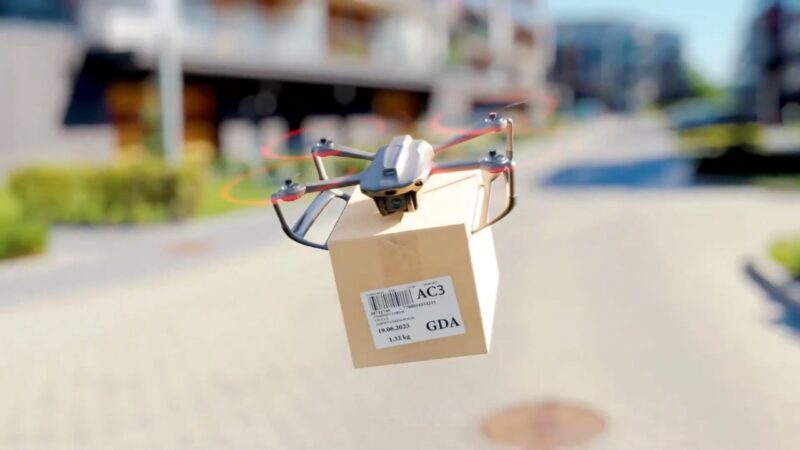
Drone delivery has reached an awkwardly important milestone. It works.
Not “works in a carefully edited promotional video.” Not “could work five years from now if regulators cooperate.”
People in several U.S. cities can already order something from Walmart, watch a drone fly toward their house, and have the package lowered into their yard.
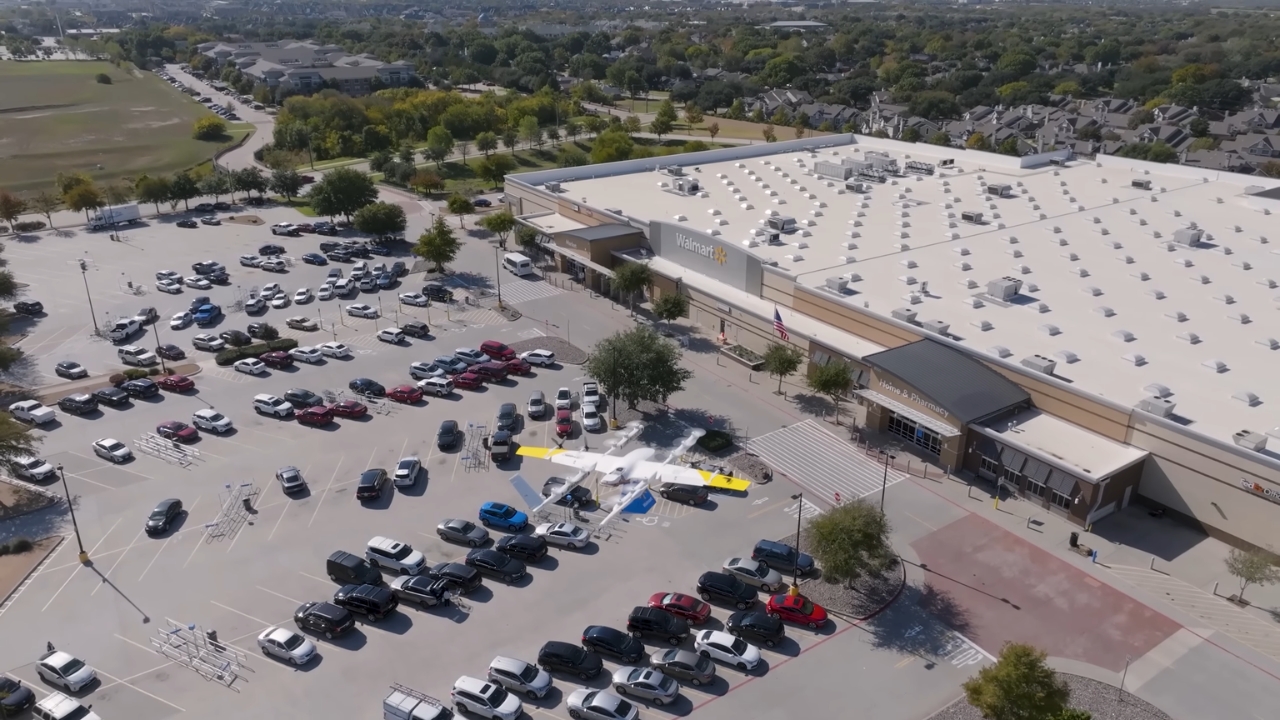
The less futuristic part is that you usually need to live close to a Walmart with a fenced-off drone base sitting in its parking lot. I actually find that detail more interesting than the drone.
For years, delivery drones were presented as a giant technological problem.
Could aircraft fly themselves safely? Could they navigate neighborhoods? Could they carry packages without smashing somebody’s eggs into a driveway?
Companies have made considerable progress on those problems.
Now the difficult question is becoming much more ordinary – Can they put enough launch sites in enough useful places to make the service matter?
The Drone Airport Might Be Eight Parking Spaces
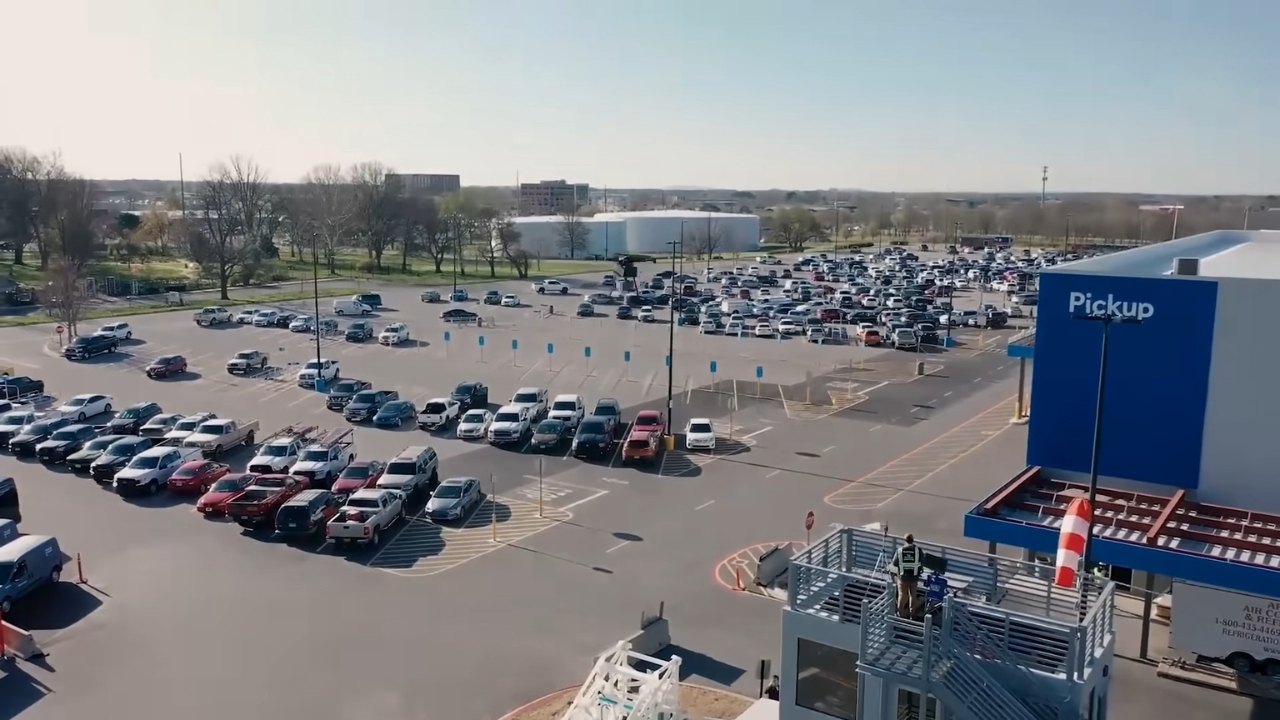
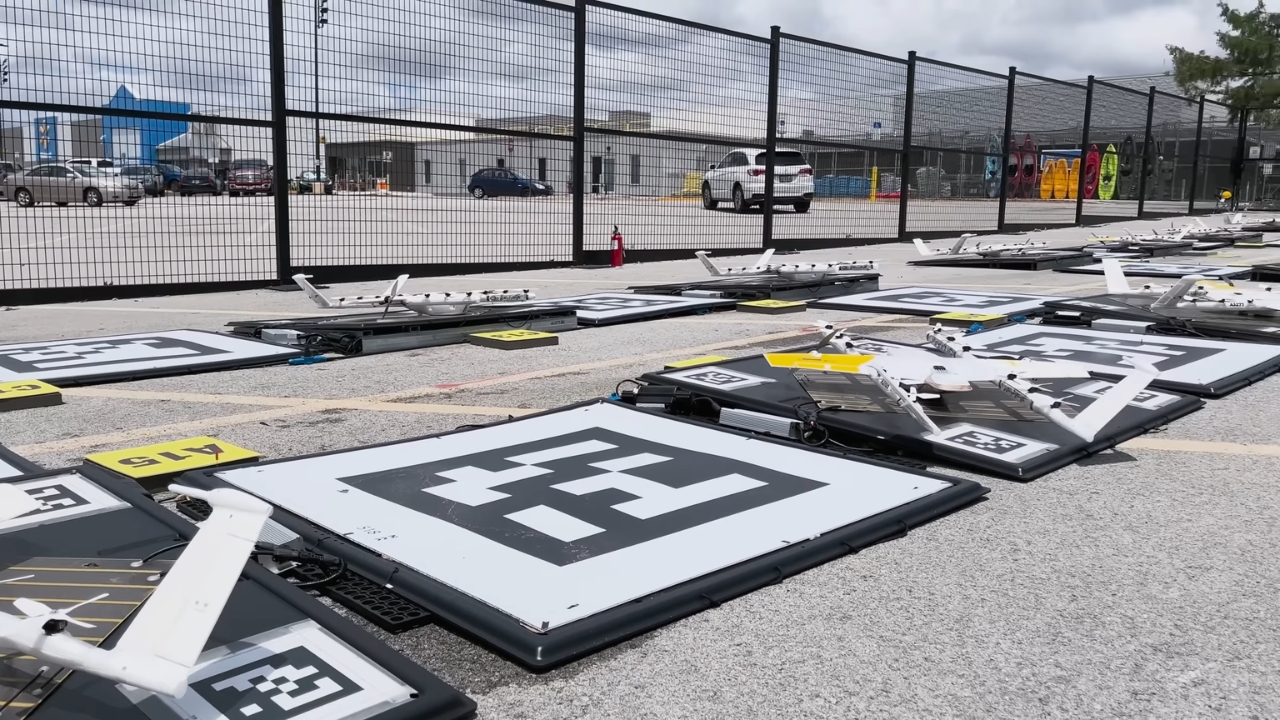
Wing, the drone company owned by Alphabet, has been building delivery operations around Walmart stores. Its infrastructure is deliberately unglamorous.
According to Wing’s description of its hubs, the delivery sites do not require major construction. A site can essentially consist of equipment surrounded by a fence in an existing parking lot.
That means a retailer does not need to build a miniature airport every time it wants drone delivery. That is very clever.
The impressive engineering is flying around above everybody’s houses. The important business decision is happening on the asphalt.
Walmart already has thousands of stores positioned near large numbers of American households.
Put drone infrastructure beside selected stores, and those locations suddenly become small aerial distribution centers.
Wing and Walmart announced in January 2026 that they planned to add drone delivery at another 150 Walmart stores.
Under the expanded Walmart partnership, the network is expected to grow beyond 270 locations and could put drone delivery within reach of more than 40 million Americans by 2027.
The parking lot, in other words, is part of the technology.
What Actually Happens When You Order Something?
The process is actually much simpler than the aircraft makes it look.
A customer places an eligible order and selects drone delivery. A small package is prepared at the store and attached to the delivery system.
Then, the drone takes off, follows its planned route to the customer’s address, hovers above the delivery location, and lowers the package using a cable. It does not need to land on your lawn.
Wing’s system asks customers to choose a suitable delivery spot such as a driveway or backyard.
Walmart’s drone delivery guidance says customers must keep that area clear of people and pets.
The exact address, weather, and contents of the order all determine whether drone delivery is available.
The aircraft is highly automated, which deserves a little explanation. Nobody is sitting somewhere with a joystick manually steering your tomatoes around telephone poles.
Software handles much of the flight using predetermined routes, navigation systems, and information about the aircraft and surrounding airspace.
Human operators supervise the operation rather than manually flying every second of every journey.
That distinction matters because one pilot manually controlling one drone would be a fairly terrible delivery business.
The economics become much more interesting when automation allows people to supervise multiple operations efficiently.
Your Weekly Grocery Shop Is Staying on the Ground
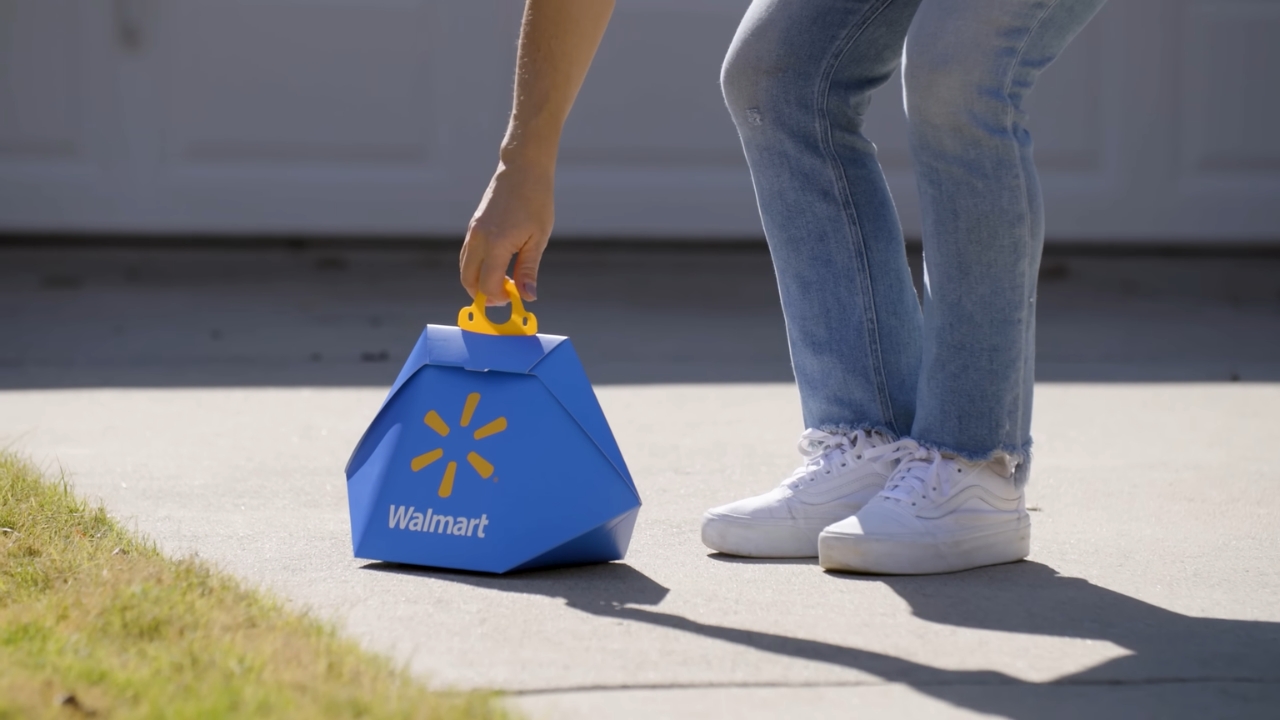
The biggest limitation becomes obvious once you start shopping. These drones carry small loads.
Walmart says allowable orders generally range from roughly two to eight pounds depending on the drone provider.
A Wing operation proposed in Missouri, for example, described deliveries of about 2.5 pounds within a six-mile radius.
That rules out the fantasy of your entire weekly grocery order descending majestically from the sky.
Milk, several bottles of soda, a giant bag of dog food, and enough groceries to feed a family for five days still make considerably more sense in a vehicle.
Drone delivery works better for the irritating little purchases.
Charlotte offers a good example of how useful the service can be. Residents can already use drone delivery in Charlotte to get a quick lunch or even painter’s tape for a small home project.
You forgot eggs.
The baby wipes are nearly gone.
You need one ingredient for dinner.
Someone used the last of the coffee.
Those orders are where I start seeing the point.
Sending a car several miles to deliver one small item is a strangely large solution to a tiny logistics problem. A lightweight electric aircraft carrying only that item has a much more logical job.
Wing says deliveries can arrive in as little as 30 minutes. More importantly, people are apparently using the service repeatedly rather than treating it entirely as a flying novelty.
The company says it has completed more than one million commercial deliveries, and its heaviest users reportedly order several times per week.
That surprised me more than the aircraft. A drone delivering a potato once is funny. A customer using drone delivery three times a week is a business.
A delivery service becomes valuable once customers make it a habit. Netflix’s red envelopes proved that years ago with DVDs delivered by mail.
Living Six Miles Away Is Not Enough
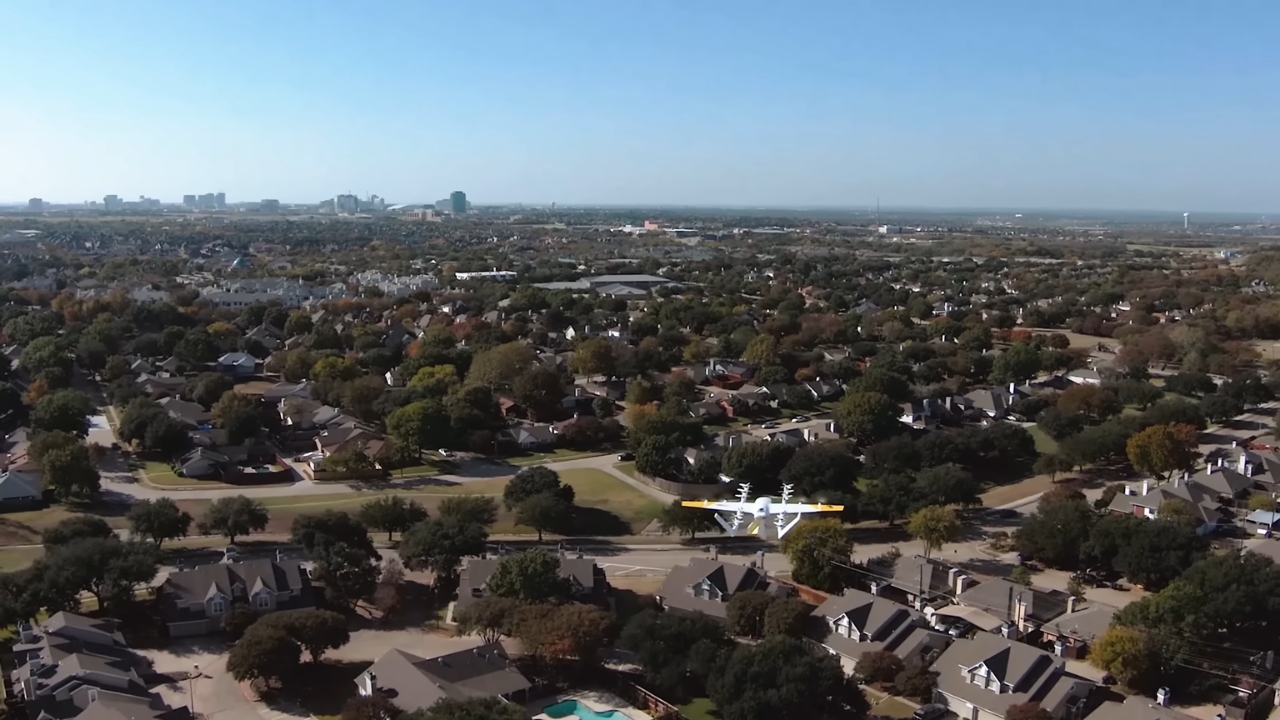
Here is where the experience becomes less magical. Being near a participating store does not automatically mean your house qualifies.
Your address has to fall inside an approved service area. The route needs to work. The airspace needs to work.
The delivery location at your property needs to work. Your order has to meet weight requirements.
Weather can stop the flight.
So two households living relatively close to each other can have completely different experiences.
One gets a button offering drone delivery. The other gets a van.
Walmart tells customers that availability depends on the exact address, local conditions, and the rules of the drone operator.
I suspect this is one reason drone delivery can simultaneously feel real and nonexistent.
If you live inside one of these operating zones, the technology can become boring remarkably quickly. If you live ten miles farther away, it remains something you watch on YouTube.
Regulation Still Determines How Far This Can Go
Flying a drone around a backyard is easy compared with building a commercial network that routinely crosses neighborhoods.
One of the important terms here is beyond visual line of sight, usually shortened to BVLOS.
It simply means the drone flies farther than a pilot standing on the ground can directly see.
Ordinary commercial drone rules have historically placed significant restrictions on that type of operation. Delivery networks obviously need it.
A person cannot stand outside Walmart and visually follow a tiny aircraft all the way to somebody’s house several miles away.
The FAA has therefore created certifications and waivers allowing approved delivery operators to perform more advanced flights.
Its package delivery rules use the Part 135 air-carrier framework for commercial operators, and Wing became the first U.S. drone company to receive that authority in 2019.
View this post on Instagram
The FAA is also working on broader rules intended to make routine BVLOS operations easier to scale. A proposed federal rule would move the industry closer to standardized operations instead of relying as heavily on specialized approvals.
That regulatory change could matter almost as much as a better drone.
You can manufacture thousands of aircraft. Scaling thousands of legal flight routes is another problem entirely.
Then the Neighbors Get a Vote
Putting the infrastructure in ordinary parking lots creates another complication.
Ordinary people live nearby.
Noise has already become one of the recurring objections around proposed drone sites. Residents near planned Walmart operations in Georgia and Missouri have raised concerns about repeated aircraft noise, safety, and the effect of turning nearby stores into drone hubs.
In Georgia, Cobb County rejected proposals for Walmart drone facilities after substantial neighborhood opposition.
The dispute illustrates how local rules affect delivery drones: towns can restrict launch sites through zoning laws, but the FAA generally controls the airspace above them.
Cobb County commissioners unanimously rejected a Walmart drone delivery hub in East Cobb over concerns about noise, safety, and property values.
The decision halts the project for at least a year, though it could return later. https://t.co/oeK64Vc48z
— Everything Georgia (@GAFollowers) April 23, 2026
Noise is particularly interesting because measuring it does not settle the argument.
A company can tell you the number of decibels produced by an aircraft. A resident can still find its particular high-pitched sound irritating when it passes overhead repeatedly.
Both things can be true. And this problem becomes more important if drone delivery succeeds.
Ten drones per day are a curiosity. Hundreds of flights across the same neighborhood can pretty much be considered infrastructure.
The debate is already reaching the courts. In September 2026, a group of U.S. states challenged the FAA’s environmental review connected to proposed commercial drone rules, raising broader questions about noise and other effects of expanded operations.
The aircraft can work perfectly, and the rollout can still become difficult. That is exactly the kind of friction technology demonstrations tend to leave out.
The Real Competition Is the Car
I don’t think drone delivery needs to replace delivery vans to succeed. It probably should not try, to be honest.
A van is excellent at carrying lots of things. A drone is, obviously, terrible at that.
A drone is excellent at carrying one light thing quickly without sending a full-size vehicle on the same trip. Different jobs.
The question I would ask is not whether drones can deliver every Walmart order. It is how many existing trips involve moving something weighing two pounds across five miles. There are an enormous number of those.
If the economics eventually make sense, that gives drone delivery a surprisingly large niche before anybody needs to start talking about replacing conventional delivery.
The Technology Is Finally the Boring Part
Drone delivery spent years sounding like science fiction because everybody focused on the flying machine.
The machine now works well enough that the fascinating problems have become parking spaces, service radiuses, package weights, weather, local permits, flight rules, and whether your neighbors hate the noise.
I consider that progress. Technologies usually start becoming real when the conversation gets boring. It is the natural order of things.
Wing and Walmart are now trying to turn scattered launch sites into a network large enough that millions more households happen to live near the right parking lot.
If they succeed, people probably will not think much about autonomous aircraft or airspace management.
They will think, “I forgot coffee.” Then something will buzz overhead 15 minutes later.
That is considerably less dramatic than the flying-delivery future we were promised. It is also much more believable.