Imagine walking into a hospital and finding two robots waiting in the corridor.
One has a remarkably realistic face, expressive eyes, and a carefully programmed smile. It turns toward you as you approach, maintaining eye contact with unsettling enthusiasm.
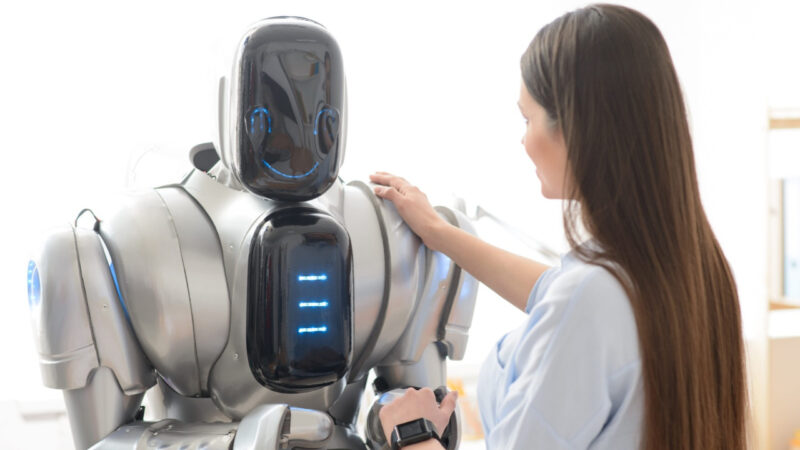
The other looks like a cabinet on wheels. It has a screen, a mechanical arm, and a few lights indicating what it’s doing.
Both robots can perform the same task. Which one would you trust? I’d choose the cabinet. Immediately.
Something about a machine trying desperately to look human makes me question what its designers want me to believe. A friendly face can make almost anything seem approachable.
That becomes a problem when the face belongs to a machine capable of making expensive, unpredictable, or physically dangerous mistakes.
I think robots should look like the machines they are. Their appearance should help us understand their abilities, limitations, and intentions. The industry’s fascination with realistic human faces deserves considerably more scrutiny.
The Problem With Giving Machines Human Faces
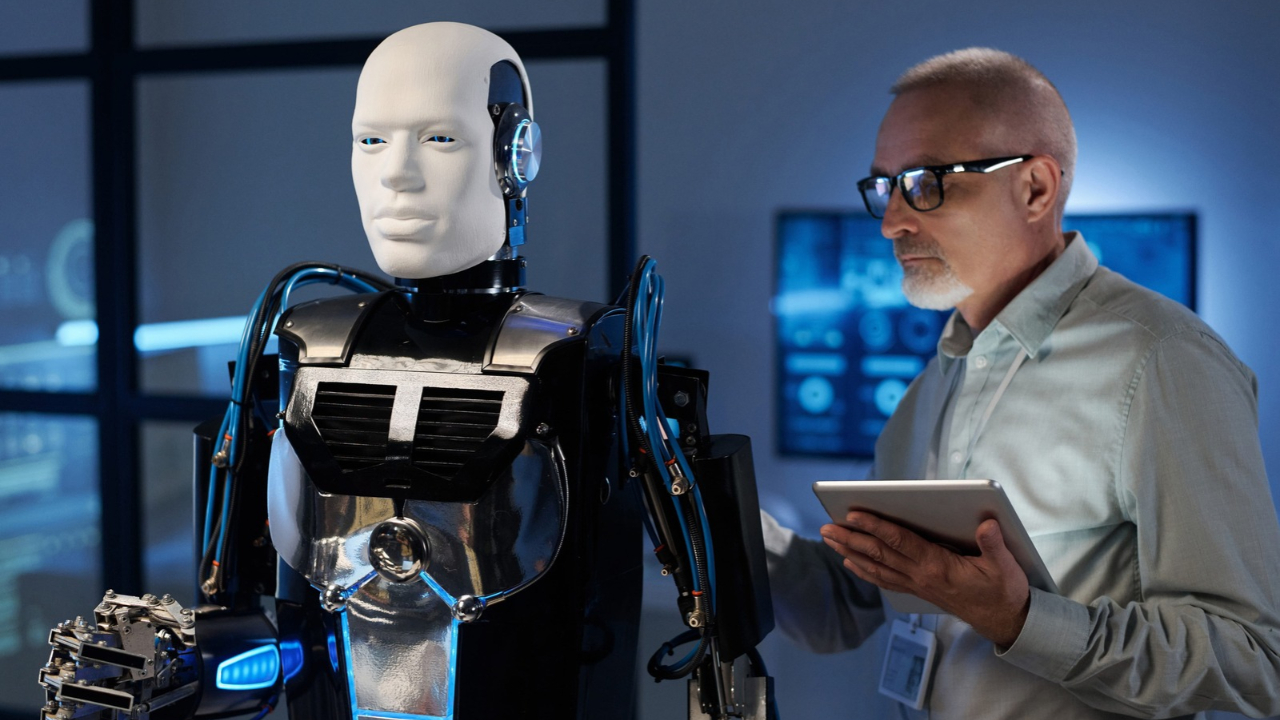
Humans are remarkably good at reading faces. We interpret expressions, recognize emotions, and make assumptions about someone’s intentions within seconds.
Robot designers know this.
Give a machine expressive eyes, a smile, and a pleasant voice, and people may instinctively assign it familiar human qualities. Researchers call this anthropomorphism, the tendency to attribute human characteristics to something that isn’t human.
The appeal is obvious. A humanoid robot might feel easier to approach, particularly when it needs to communicate with customers, patients, or older adults.
Unfortunately, appearances can establish expectations that the underlying technology cannot satisfy.
Consider a robot receptionist that maintains eye contact, remembers your name, and responds with an enthusiastic smile. You might assume it understands a complicated request.
Then you ask something slightly outside its programming. The robot produces an irrelevant answer while maintaining the same reassuring expression.
That smile suddenly seems considerably less reassuring.
A convincing face can encourage confidence in capabilities that haven’t been demonstrated. I consider that a serious design problem.
The Uncanny Valley Is Only Part of the Story
View this post on Instagram
There’s a familiar explanation for why humanlike robots sometimes make people uncomfortable: the uncanny valley.
The idea, originally proposed by Japanese roboticist Masahiro Mori, describes how something approaching human realism can provoke unease when its appearance or behavior feels slightly wrong.
A robot with obviously mechanical features might seem charming. Give it realistic skin, imperfect expressions, and movements that almost resemble ours, and the experience can become deeply uncomfortable.
A 2024 study examining humanoid robots explored this phenomenon through interactions and evaluations involving advanced robotic systems, including Ameca. Researchers documented responses ranging from curiosity and engagement to discomfort.
I understand the fascination with making robots look astonishingly lifelike. The engineering involved is impressive.
I question the obsession with realism as a product objective.
A machine can reproduce the appearance of happiness without experiencing it. Its facial expressions may also communicate intentions that its software cannot reliably fulfill.
People deserve to understand those limitations from the beginning.
Research Suggests Humanlike Robots Have a Trust Problem
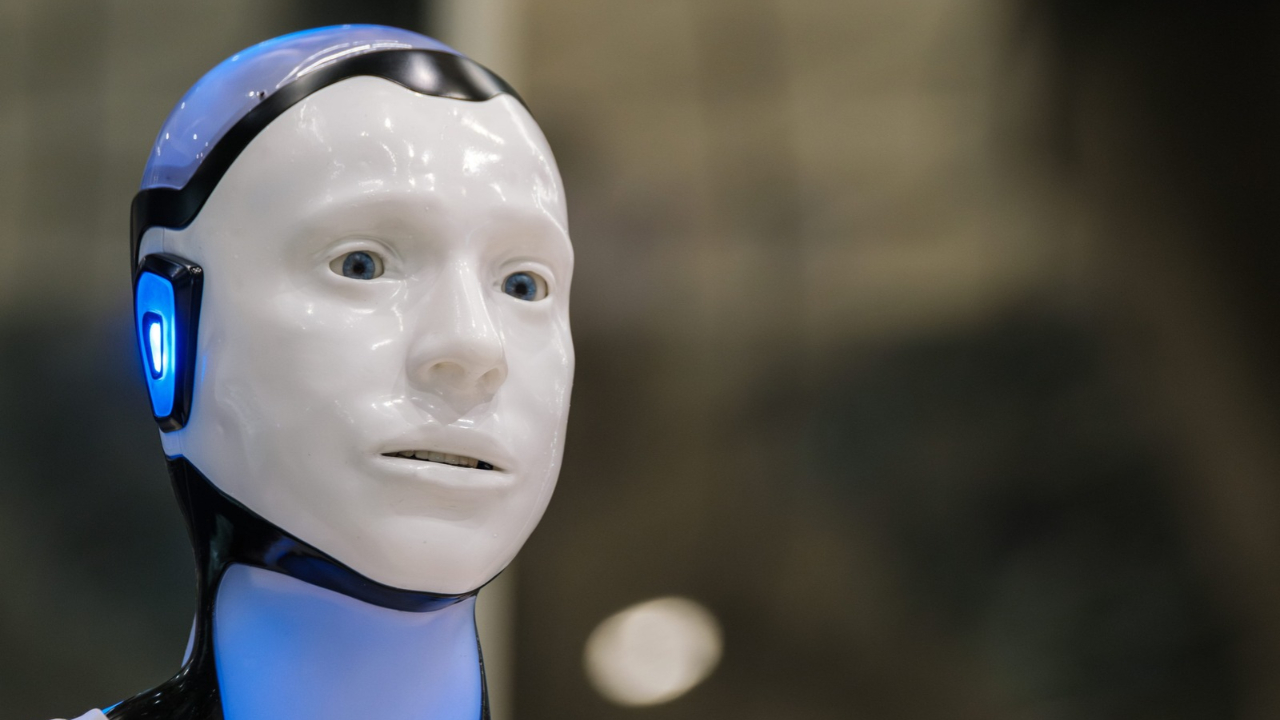
The evidence surrounding robot appearance is especially interesting because researchers have reached different conclusions.
A 2024 study of human–robot trust found that anthropomorphic robot appearances reduced trust in task-related settings compared with technical-looking designs. Humanlike appearances also failed to make participants more forgiving when robots made mistakes.
Meanwhile, research on household robots, published in 2025, found that participants trusted humanoid designs more than a nonhumanoid robot across the scenarios studied.
The results underline how strongly context influences our reactions.
An especially revealing 2026 experiment involving 2,309 participants examined perceptions of robots performing different service tasks using AI-generated videos.
Researchers found that task type mattered substantially. Robots carrying out mechanical activities were perceived as more trustworthy than those handling tasks involving thinking or feeling.
Human supervision also helped improve perceived trustworthiness.
Physical appearance had no significant influence on trust in the fully automated settings studied.
That’s a finding robot manufacturers should take seriously.
People’s confidence depends heavily on what they’re asking a machine to do. A pleasant face offers very little practical reassurance when the robot is responsible for something consequential.
A Robot’s Design Should Explain Its Job
Look at Boston Dynamics’ Spot.
Spot has four articulated legs, a compact body, and sensors that help it navigate different environments. The company uses it for tasks including industrial inspections and data collection.
Its appearance makes sense for its purpose. It needs mobility, stability, and equipment capable of gathering information. Then consider Moxi, the hospital robot developed by Diligent Robotics.
Moxi has a mobile base, a mechanical arm, and a simple expressive display. It helps hospital staff with activities such as delivering supplies, transporting samples, and fetching equipment.
Its design includes approachable visual features while retaining an unmistakably mechanical appearance. I find that approach sensible.
Even a robotic vacuum cleaner demonstrates the value of straightforward design. It needs to move around furniture, clean floors, and return to its charging station. A realistic human face would add absolutely nothing to those responsibilities.
The strongest robot designs make their intended functions understandable.
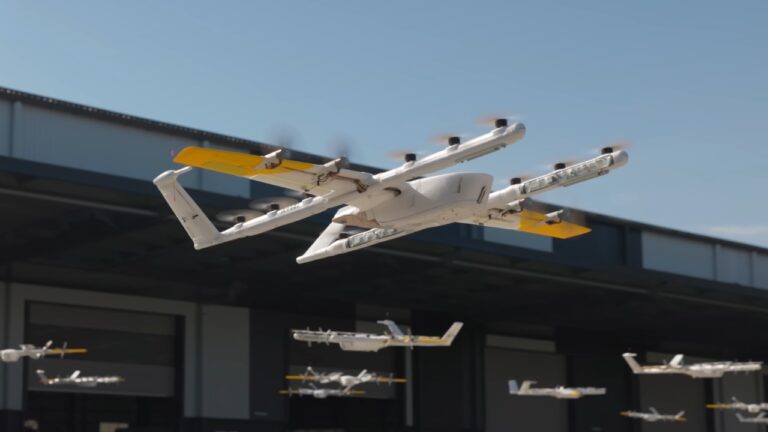
We’ve already seen a similar principle emerge with autonomous aircraft. As I explored in my article about drone deliveries in Charlotte, useful automation becomes convincing when it performs ordinary tasks reliably.
People want their deliveries to arrive correctly. The aircraft’s personality is irrelevant.
Friendly Faces Can Become a Marketing Shortcut
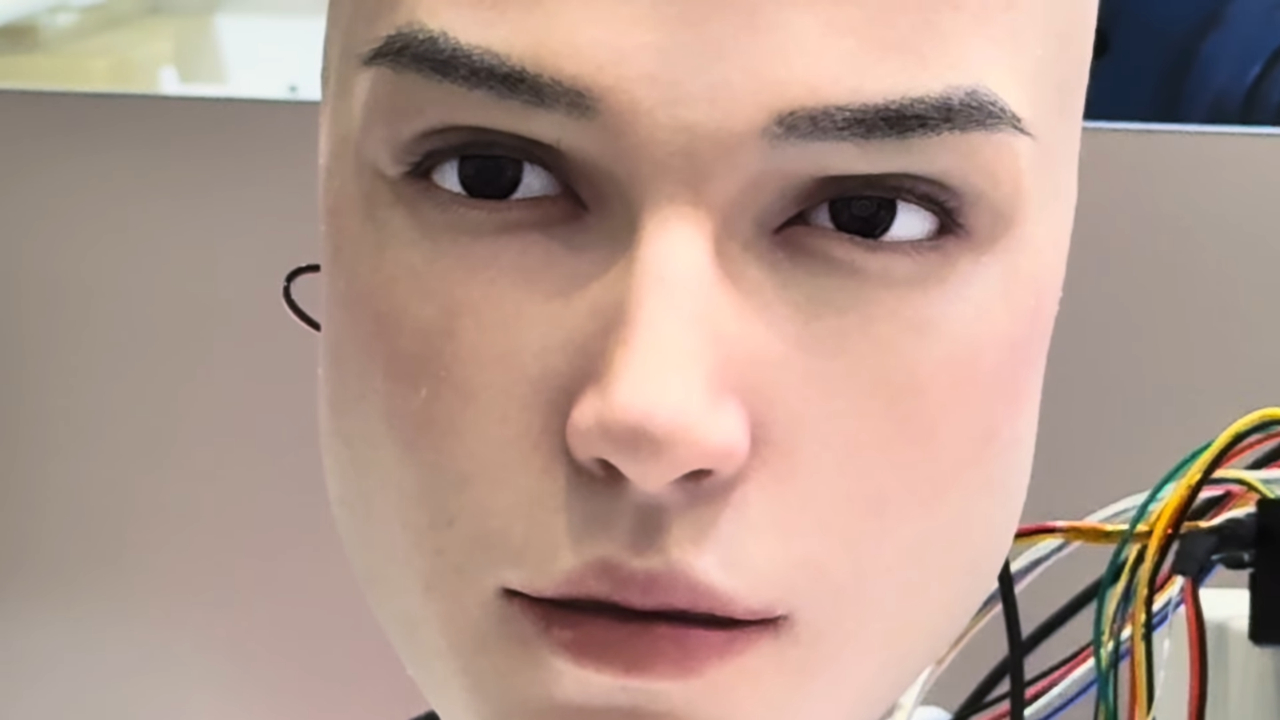
My biggest concern involves the companies designing these machines.
A lifelike face can become an extremely effective promotional feature. It photographs beautifully, attracts attention at demonstrations, and provides an easy way to communicate technological sophistication.
It also introduces the temptation to manufacture emotional attachment. Imagine an expensive household robot programmed to remember personal details, express concern, and respond affectionately when its owner returns home.
That behavior might genuinely make interacting with the machine more comfortable. It also raises uncomfortable questions.
Who controls the information collected during those interactions? How accurately does the robot recognize its surroundings? What happens when it misunderstands a command? Can someone immediately interrupt its actions?
We’ve already examined the accountability problem with AI assistants making incorrect purchases.
Physical robots extend those questions into environments where mistakes may affect people’s safety.
I want manufacturers to spend considerably more effort answering them.
Four Things That Would Make Me Trust a Robot
My expectations for a trustworthy robot are straightforward:
- Visible intentions. The machine should clearly indicate when it intends to move, interact, or perform a potentially risky action.
- Understandable limitations. Users should know which tasks the robot can handle and when human assistance is necessary.
- Immediate human control. People need accessible ways to stop, redirect, or override automated behavior.
- Demonstrated reliability. Manufacturers should provide meaningful performance evidence, including how their systems behave when something goes wrong.
None of these requirements depends on whether a robot has eyebrows.
And all four could make a real difference when people encounter increasingly autonomous machines in their homes, workplaces, and public spaces.
Humanlike Features Still Have Their Place
Some degree of human resemblance can be useful.
A robot designed to assist with communication might benefit from a face that indicates where its attention is directed. Simple expressions could help users recognize whether instructions have been received. The value comes from communicating useful information.
A study of human–automation communication found that meaningful vocal signals conveying uncertainty improved trust-related outcomes. Superficial humanlike appearance produced no comparable benefit.
That’s the design philosophy I would support. Every humanlike feature should serve an identifiable purpose, and designers should be able to explain that purpose clearly.
A pair of animated eyes might help someone follow a conversation. A realistic synthetic face capable of displaying dozens of emotions deserves a much stronger justification.
I’d Rather Have an Honest-Looking Machine
I expect robots to become increasingly common in places where people have little choice about encountering them.
Hospitals, warehouses, hotels, shops, and eventually more homes will contain machines performing activities that previously required human assistance.
Their appearance will influence how people behave around them, how much authority they assign them, and how readily they accept their decisions.
That gives robot manufacturers an enormous responsibility.
I would trust a machine more readily if its design made its purpose obvious and its capabilities easy to judge. Visible mechanical features can help establish realistic expectations, especially when paired with dependable performance and clear controls.
Humanlike appearance may make a robot fascinating to watch. Reliable behavior makes it worth having around.
If a manufacturer wants me to trust a robot, it can begin by showing me exactly what the machine does when something goes wrong.
I’ll be perfectly happy if it doesn’t smile while explaining.