

Netflix lets either two or four devices watch at the same time, depending on which plan you pay for.
As of October 2026, Standard with ads and Standard both allow two simultaneous streams.
Premium allows four. That is the short answer, and frankly, Netflix could save everyone some trouble by putting those numbers in considerably larger type.
The confusion starts because a Netflix account can also have five profiles, be signed into many devices, include Extra Members on some plans, and belong to something Netflix calls a “Household.”
None of those things changes the basic simultaneous-stream limit.
According to Netflix’s current U.S. plan details, the limits look like this:
[su_table responsive=”yes”]
| Netflix Plan | Monthly Price | Devices Watching at Once | Maximum Video Quality |
| Standard with ads | $8.99 | 2 | 1080p |
| Standard | $19.99 | 2 | 1080p |
| Premium | $26.99 | 4 | 4K + HDR |
[/su_table]
So if you have Standard and one person is watching Netflix on the living-room TV while somebody else watches on an iPad, both streams work.
A third person pressing play gets the bad news.
Premium raises that ceiling to four.
Five Netflix Profiles Do Not Mean Five People Can Watch
I think this is where a lot of the confusion comes from.
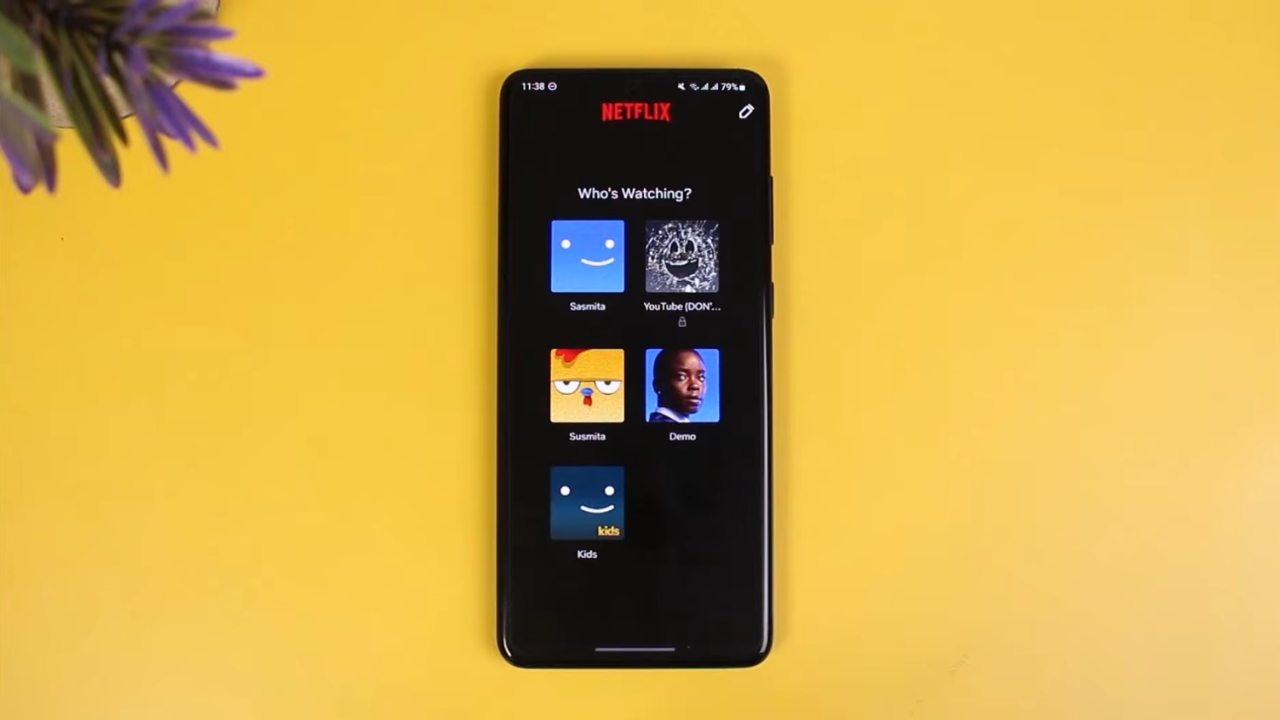
Netflix lets you create up to five profiles on one account. Each profile can have its own viewing history, recommendations, language settings, maturity controls, and My List, as Netflix explains in its profile guide.
Five profiles sound suspiciously like five users. They are not five simultaneous streams.
Imagine a family with profiles for Mom, Dad, two children, and the mysterious fifth profile called “Guest” that nobody admits using.
On a Standard plan, all five profiles can exist. Only two devices can actually play Netflix simultaneously.
Dad can watch a documentary downstairs and one child can watch a cartoon upstairs. If Mom starts a movie on another TV before either of them stops, Netflix has reached its limit.
Premium would allow four of those devices to stream at once.
The profiles organize Netflix. The plan determines how many screens can actually play something.
Netflix Does Not Care How Many Devices You Own
There is another distinction worth making. You can sign in to Netflix on multiple compatible devices.
Your television, phone, tablet, laptop, and another television do not each consume a permanent “slot.”
Netflix explains the difference between registered devices and active viewing in its device guidance. That makes much more sense once you separate devices from streams.
You could have Netflix signed in on ten devices around a household and still use a Standard plan perfectly happily if no more than two are streaming simultaneously.
Conversely, owning only three Netflix devices does not help if all three try to watch at once on Standard. The third one still loses.
What Happens When Too Many People Start Watching?
Netflix does not quietly choose somebody to sacrifice. The next person attempting to watch will generally see a message explaining that too many devices are using the account.
Netflix recommends stopping playback on another device and notes that the service can occasionally take several minutes to recognize that the other stream has ended. Its simultaneous-streaming help page explains what to do when the limit is reached.
That delay can produce the wonderfully modern family conversation in which three people insist they have already closed Netflix and everyone begins interrogating the television.
If you repeatedly hit the limit, that is when Premium becomes worth considering.
Standard With Ads and Standard Have the Same Two-Screen Limit
View this post on Instagram
One detail is easy to miss. Paying $19.99 for ad-free Standard does not give you more simultaneous streams than the $8.99 Standard with ads plan. Both support two devices at once.
The more expensive Standard plan mainly removes the ads and gives you the option of paying for an Extra Member who lives outside your household.
That makes the jump from Standard to Premium more interesting for a busy household.
Premium costs $26.99, or $7 more per month than Standard, and doubles the number of simultaneous household streams from two to four.
Disney+ offers a useful price comparison. Its Premium plan now costs $21.49 per month for new U.S. subscribers after the latest Disney+ subscription price increase.
It also adds 4K and HDR video, assuming your television, internet connection, and the particular Netflix title support them.
If four people regularly watch different things in your house, I think that $7 difference is easier to justify than it is for someone living alone.
A person who watches Netflix by themselves does not suddenly enjoy a movie twice as much because three unused streams are sitting nearby.
What About Extra Members?
Netflix’s account-sharing crackdown made this part considerably more complicated.
A Netflix account is now intended for people living in the same Netflix Household, which the company defines as the devices associated with the main place where you watch Netflix.
Netflix says it uses information including IP addresses, device IDs, and account activity rather than GPS location to determine the household, according to its Netflix Household explanation.
If somebody lives elsewhere, Netflix wants that person to either buy a separate subscription or become an Extra Member where eligible.
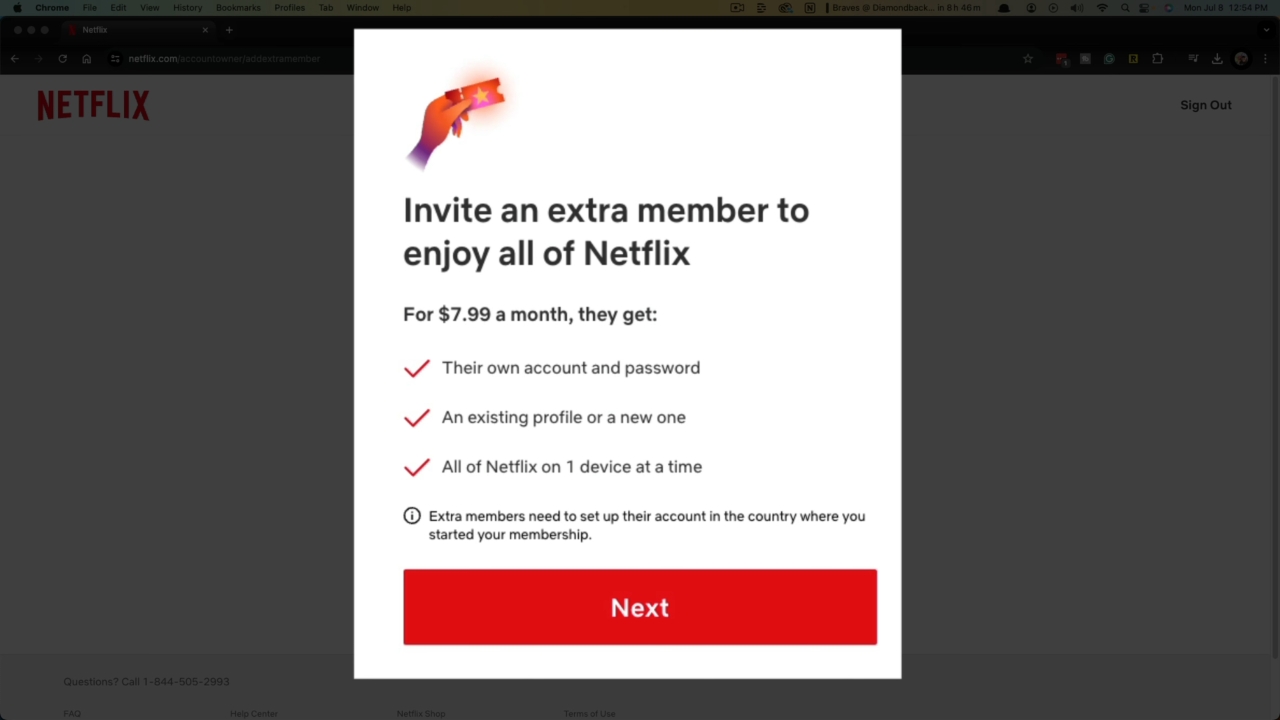
Standard allows one Extra Member slot. Premium allows up to two.
Extra Members have their own login and password, although the main account owner pays the bill. Each Extra Member can watch on one device at a time, as detailed in Netflix’s Extra Member rules.
That is important because an Extra Member is not simply another profile squeezed into your existing household account.
It is essentially a smaller Netflix membership attached financially to somebody else’s subscription.
Extra Members also get only one profile.
Netflix has managed to turn “can my sister use my Netflix?” into something requiring terminology, billing rules, and a help-center article. From Netflix’s business perspective, I understand exactly why.
I miss the days of Netflix’s red envelopes, when the biggest family argument was about who had the DVD.
Can You Still Watch Netflix While Traveling?
@travelby_laurie How to watch Netflix during Flight ✈️❤️ #travelhacks #travelling #traveltip #netflix #travelessential ♬ original sound – Traveltipsbylaurie
Yes. “Netflix Household” does not mean Netflix stops working the moment you leave your driveway.
Netflix specifically supports watching while traveling.
If you sign in from a hotel, a friend’s home, or another location, Netflix can ask you to verify the device using a temporary access code sent to the account owner. Its travel guidance explains how temporary access works.
Netflix also recommends opening the app on your device while connected to your home Wi-Fi periodically if you regularly watch away from home.
Again, this is separate from simultaneous streaming.
If you have Premium and one member of your household is traveling, that person can watch Netflix away from home as one of the account’s allowed streams.
The important limit remains how many devices are playing Netflix at the same moment.
Which Netflix Plan Makes Sense for a Household?

For most people, I would choose based on two questions.
Do you hate ads?
And:
How many people realistically watch Netflix at the same time?
Some family members may prefer YouTube, which now leads U.S. television viewership. A YouTube video does not count toward your Netflix stream limit, so consider actual Netflix use before you pay for Premium.
If your household also pays for YouTube TV, ask if live channels justify a separate monthly bill. You can cancel YouTube TV or pause the subscription and keep Netflix as your main source of entertainment for a few months.
For one or two viewers who do not mind advertising, Standard with ads has the same two-stream capacity as regular Standard for far less money.
For one or two people who strongly dislike commercials, Standard is the obvious step up.
Premium makes much more sense when three or four simultaneous viewers are a real possibility, particularly in families with several televisions, teenagers, tablets and wildly incompatible ideas about what counts as entertainment.
The 4K upgrade matters too, but I would not pay for Premium purely because Netflix writes “4K” beside it unless you actually have a good 4K television and care about picture quality.
Four simultaneous streams are easier to notice.
The Simple Version
Netflix’s rules have accumulated enough extra terminology that the original question can sound harder than it is.
Here is the part worth remembering:
- Standard with ads: 2 devices can watch at once
- Standard: 2 devices can watch at once
- Premium: 4 devices can watch at once
- Extra Members: 1 device at a time per Extra Member
- Profiles: up to 5, but profiles do not add simultaneous streams
- Signed-in devices: you can have many; only active streams count against the plan limit
Netflix has spent years making television available on practically every screen we own.
The mildly amusing consequence is that it now has to sell us increasingly expensive plans because we occasionally try to use all those screens at the same time.
For a household where two streams are enough, Standard does the job.
Once the third person regularly starts asking, “Who is watching Netflix right now?”, Premium has probably made its case.